

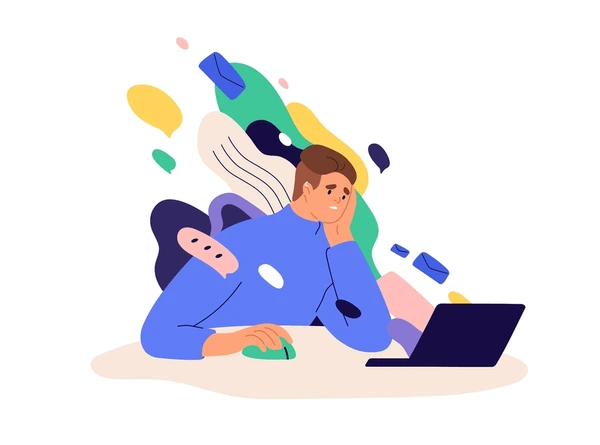
We live in a world where the brain is constantly plugged in — buzzing, blinking, and refreshing. Every notification releases a tiny hit of dopamine, the “anticipation” neurotransmitter.
Over time, this creates a loop: check à reward à anticipate à repeat
Digital Overload Weakens Focus & Deep Thinking
This loop is reinforced by design and can lead to reduced attention, compulsive checking, and mental exhaustion.
Screen use trains the brain to prefer rapid switching instead of sustained attention.
This makes real-life tasks feel harder, slower, and more frustrating. This can activate the HPA axis, increasing cortisol and keeping the nervous system in mild fight-or-flight.
So even when you’re tired, bored, or trying to relax, your body stays switched on and calm begins to feel uncomfortable.
Too much digital overload can disrupt sleep cycle, and increases next-day anxiety.
Scrolling gives temporary relief, so the loop strengthens even if it drains you long-term.
Excessive screen time in adolescents and young adults may have lasting cognitive effects, potentially increasing early-onset dementia risk in future generations. By taking steps today — setting limits on screen use, encouraging offline activities, and prioritizing sleep and mental health we can protect our brains.
Seek help!
Reach out for professional support or a counselling psychologist if what you’re experiencing starts to interfere with everyday life. You don’t need a crisis or a diagnosis, just a sense that something isn’t feeling right.
If you notice Persistent stress, anxiety, or overwhelm, Difficulty focusing, constant mental fatigue, or brain fog, Compulsive behaviours, and sense of burnout.
References
Verma, A., Kumar, A., Chauhan, S., Sharma, N., Kalani, A., & Gupta, P. C. (2025). Interconnections of screen time with neuroinflammation. Molecular and cellular biochemistry, 480(3), 1519–1534. https://doi.org/10.1007/s11010-024-05123-9
