

Have you ever been so deeply immersed in an activity that the world seemed to fade away—time passed unnoticed, self-doubt quieted, and effort felt almost effortless? Many people describe these moments as being “in the zone.” In psychology, this experience is known as flow state.
Flow is more than just productivity or concentration.
It is a deeply human experience of presence, meaning, and optimal functioning.

Over the past few decades, flow has emerged as one of the most influential concepts in psychology, particularly in the study of well-being, motivation, creativity, and mental health.
This article explores the science behind flow, its historical roots, its core components, and why understanding and cultivating flow can play a powerful role in overall psychological well-being.
In the 1970s, Csikszentmihalyi began studying artists, musicians, athletes, and craftsmen. What fascinated him was not external success or rewards, but the way these individuals described their experience while engaged in meaningful work. Many reported feeling completely absorbed, losing awareness of time, hunger, and even themselves. The activity itself became the reward.
Csikszentmihalyi named this state “flow”—because participants often described the experience as being carried along by a current, with effort and enjoyment seamlessly intertwined.
Over time, flow became a foundational pillar of positive psychology, shifting the focus from merely treating psychological distress to understanding human strengths, fulfillment, and optimal experience.
What Exactly Is Flow State?
Flow is a psychological state characterized by deep engagement, focused attention, and intrinsic enjoyment. It is not passive relaxation, nor is it forced effort. Instead, it sits at the intersection of challenge and capability.

Flow can occur during:
- Creative pursuits (writing, painting, music)
- Professional tasks
- Sports and physical activity
- Learning and studying
- Meaningful conversations
- Even everyday activities when approached with intention
What distinguishes flow from ordinary concentration is the quality of experience—one that feels immersive, rewarding, and deeply satisfying.
The Core Components of Flow State
Researchers have identified several key characteristics that consistently appear during flow experiences.
1. A Balance Between Challenge and Skill
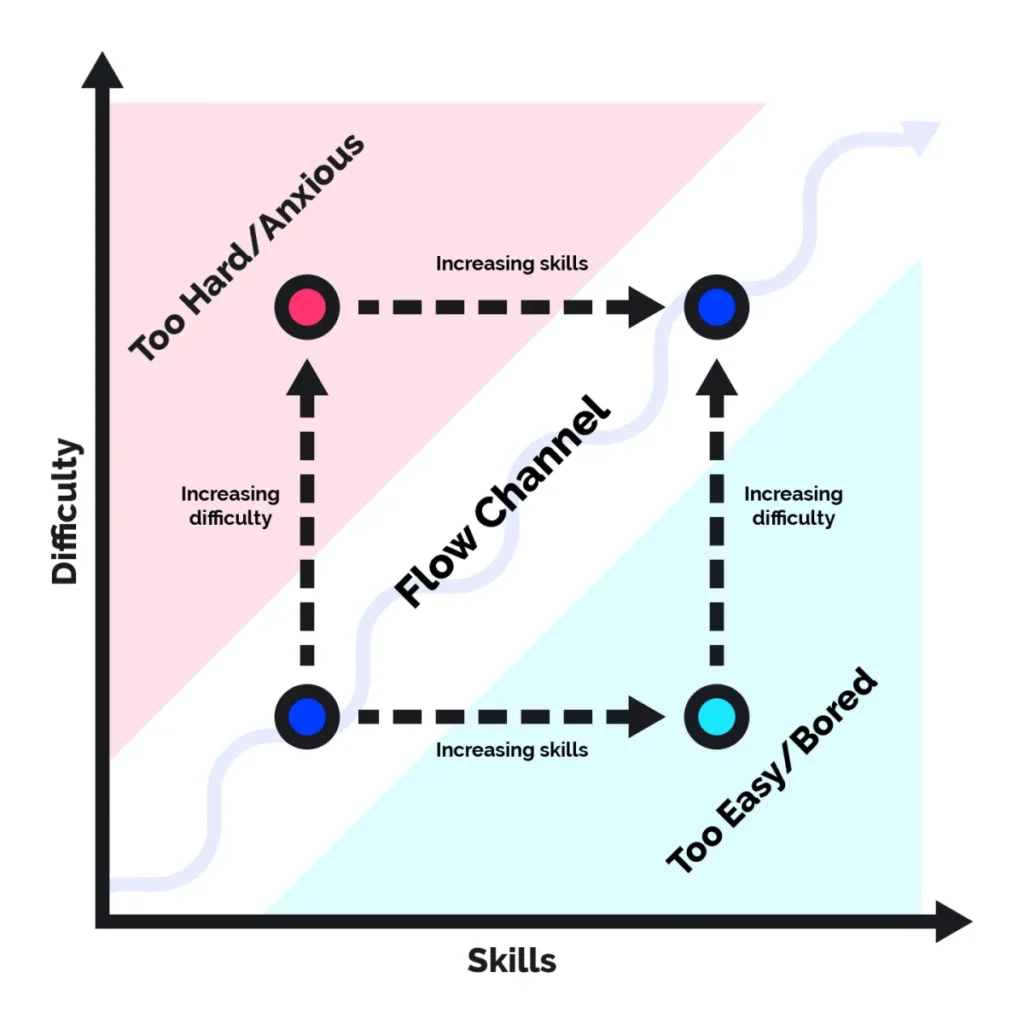
Flow occurs when a task is challenging enough to be engaging, yet manageable with one’s existing skills. When challenges are too high, anxiety arises. When they are too low, boredom sets in. Flow exists in the in-between space.
2. Clear Goals
When goals are clearly defined for a specific task, attention tends to organizes itself around the task. Clarity reduces mental noise and helps the mind stay anchored in the present moment.
3. Immediate Feedback
Flow thrives on feedback—whether external (a coach’s response) or internal (a sense of progress). Feedback helps individuals adjust their actions in real time, maintaining engagement.
4. Deep Focus and Concentration
During flow, attention becomes fully absorbed. Distractions fade, and mental energy is directed entirely toward the activity at hand.
5. A Sense of Control
People in flow often report feeling capable and in control, even when the task is demanding. This sense of control is not about dominance, but about trusting one’s abilities.
6. Loss of Self-Consciousness
Self-criticism and performance anxiety diminish. The constant inner commentary quiets, allowing action to unfold naturally.
7. Altered Experience of Time
Time may seem to pass unusually quickly—or, in some cases, slow down. This altered time perception reflects complete immersion.
8. Intrinsic Reward
Perhaps most importantly, flow is enjoyable in itself. The motivation comes from the experience, not from external validation or outcomes.
Why Understanding Flow Matters
Flow is not a rare or elite experience reserved for high achievers. It is a human capacity that can be cultivated intentionally.

- Flow contributes to meaningful engagement and self-actualization.
- Flow is associated with reduced stress responses, enhanced positive affect, and potentially beneficial neuroendocrine changes.
- In educational and occupational settings, promoting flow can improve academic achievement, job satisfaction, productivity, and creativity.
Flow and Psychological Well-Being
Research consistently links flow to:
- Increased positive emotions
- Greater life satisfaction
- Reduced rumination and stress
- Enhanced sense of meaning and purpose
People who experience flow more frequently tend to report higher overall well-being—not because life is easier, but because they are more engaged with it.
Flow and Mental Health
From a mental health perspective, flow offers several protective benefits:
- Reduces rumination: By anchoring attention in the present, flow interrupts repetitive negative thinking. By reducing mental clutter and self-evaluation, flow can lower stress and support nervous system regulation.
- Supports emotional regulation: Flow naturally anchors attention in the present moment, reducing excessive worry about the past or future. Focused engagement can reduce emotional overwhelm. This can be particularly helpful for individuals who struggle with anxiety, overthinking, or emotional overwhelm.
- Encourages behavioral activation: In depression, motivation and engagement often decrease. Flow-inducing activities often counter withdrawal and disengagement seen in depression and gently reintroduce pleasure, mastery, and interest—without pressure to “feel better” immediately.
- Builds self-efficacy: Repeated flow experiences help individuals reconnect with their abilities, building confidence and a sense of competence.
Flow does not replace therapy, but it complements therapeutic work by strengthening attention, agency, and intrinsic motivation. Repeated experiences of flow
How Flow Happens in the Brain
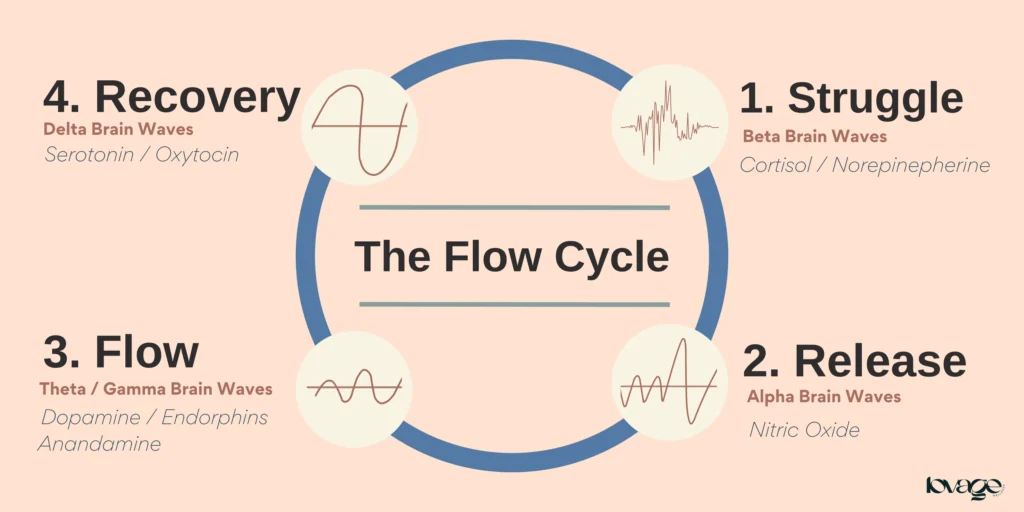
Neuroscientific research suggests that flow involves a temporary shift in brain functioning. Self-referential thinking decreases, while task-focused neural networks become more efficient. This allows actions to feel smoother, less effortful, and more intuitive.
In simple terms, the brain becomes quietly efficient, freeing mental resources for creativity and problem-solving.
How to Gently make space for Flow In Daily Life
Flow cannot be forced, but it can be supported through intentional choices:
- Choose activities that feel meaningful or interesting
- Break tasks into clear, manageable steps
- Reduce distractions where possible
- Gradually increase challenge as skills grow
- Allow yourself to be imperfect while learning
- Practice being present rather than outcome-focused
Even small moments of flow—reading, walking, listening, creating—can make a meaningful difference over time.
Flow is more than a brief moment of enjoyment. Over time, experiences of flow can help people feel more connected to what gives their life meaning, direction, and a sense of purpose. Many individuals notice that activities which bring flow are often the ones that reflect their values and natural strengths.
Flow can act as a gentle guide, helping life feel more balanced, engaging, and fulfilling. It reminds us that healing is not only about reducing stress or distress, but also about restoring connection to experiences of vitality, presence, and meaning.
