

Some people experience anxiousness in their chest like an impending storm. Others become depressed without knowing why. And frequently, people ask themselves, “Is it just me… or is it in my genes?”
The truth is somewhere in the middle. Neither a single gene nor a single event can produce anxiety or sadness.
They are the outcome of a biological mixture that includes life events, stress systems, brain chemistry, and genetic predisposition all working together like a dish.
Genetic Predisposition
If anxiety or depression runs in the family, you may have a predisposition meaning your brain is more sensitive to stress, emotions, or changes in the environment. Your HPA can be more reactive.
For example,
- Your amygdala may react faster, making you more alert to potential threats.
- Stress chemicals like cortisol may rise quicker, causing stronger physical stress reactions.
But doesn’t mean you will develop one
Many people with a genetic vulnerability never develop anxiety or depression because protective factors like supportive relationships, stable environments, healthy routines, and therapy can buffer the risk.
Brain changes in terms of chemistry
These neurotransmitters like serotonin, dopamine, and GABA are responsible for stabilizing mood, helping you feel motivated, and keeping your nervous system calm. Some people naturally produce more or less of these chemicals, or their receptors respond differently.
Genetic variations in the serotonin transporter gene (5-HTTLPR) and the BDNF gene can shape how sensitive your brain is to stress. These genes influence how efficiently your mood chemicals work and how flexible your brain is under pressure.
Researchers reviewed over 50 years of studies to understand which genetic variations are linked to major depressive disorder (MDD). They found 13 genes involved in mood regulation, especially those affecting serotonin (like SLC6A4) and brain plasticity (like BDNF) (Suktas et al., 2024).
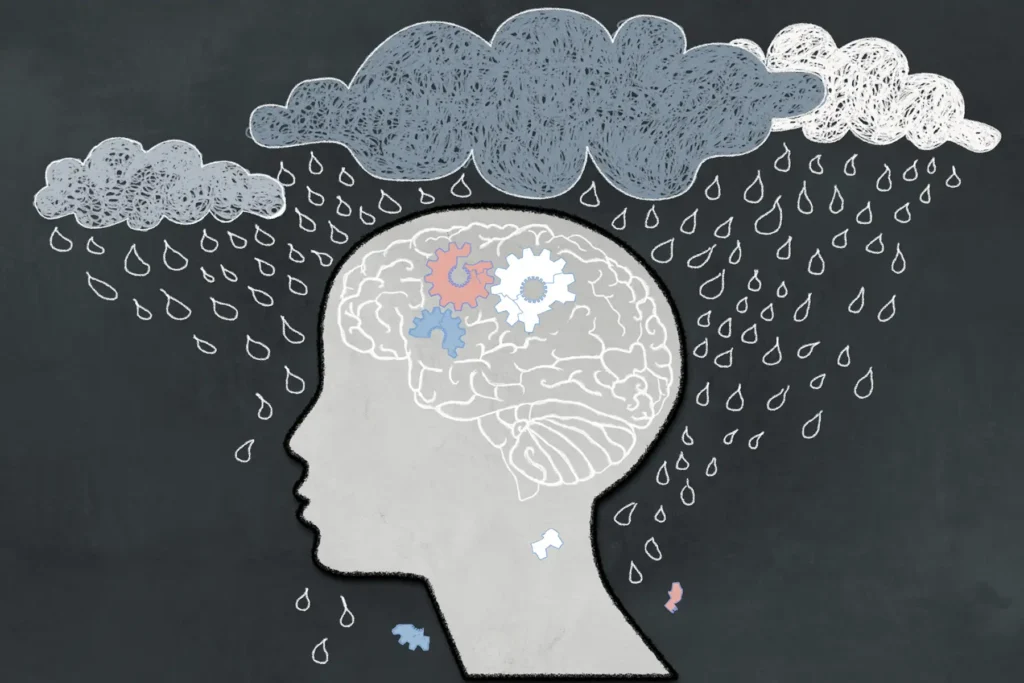
It’s a biopsychosocial mix: How these three factors interact shape our resilience.
- Environment: relationships, stress, lifestyle, safety
- Biology: genetics, brain chemistry, hormones
- Psychology: thoughts, coping skills, trauma
Tips to improve
- Lifestyle choices like regular sleep, physical activity, social support, and stress-management practices can strengthen the brain systems affected by genes.
- Healthy routines help regulate mood chemicals, calm the stress response, and boost resilience.
- Therapy and early support can also buffer genetic sensitivity, showing that while genes create vulnerability, daily habits and environment shape the outcome.
WHEN TO SEEK HELP!!
If anxiety or depression begins affecting your sleep, appetite, energy, relationships, or daily functioning, it’s important to reach out.
REFERENCES
Suktas, A., Ekalaksananan, T., Aromseree, S., Boonyarattanasoonthorn, N., & Pientong, C. (2024). Genetic polymorphism involved in major depressive disorder: A systemic review and meta-analysis. BMC Psychiatry, 24, 716. https://doi.org/10.1186/s12888-024-06195-z
Hosang, G. M., Shiles, C., Tansey, K. E., McGuffin, P., & Uher, R. (2014). Interaction between stress and the BDNF Val66Met polymorphism in depression: A systematic review and meta-analysis. BMC Medicine, 12, 7. https://doi.org/10.1186/1741-7015-12-7
