

Have you noticed heart rate rising or stomach pain when you’re nervous. It’s your brain and body communicating through HPA axis.
HPA axis stands for “Hypothalamus pituitary adrenal axis”
They are your central stress response system, an internal alarm system that protects you from danger.
How does HPA axis work?
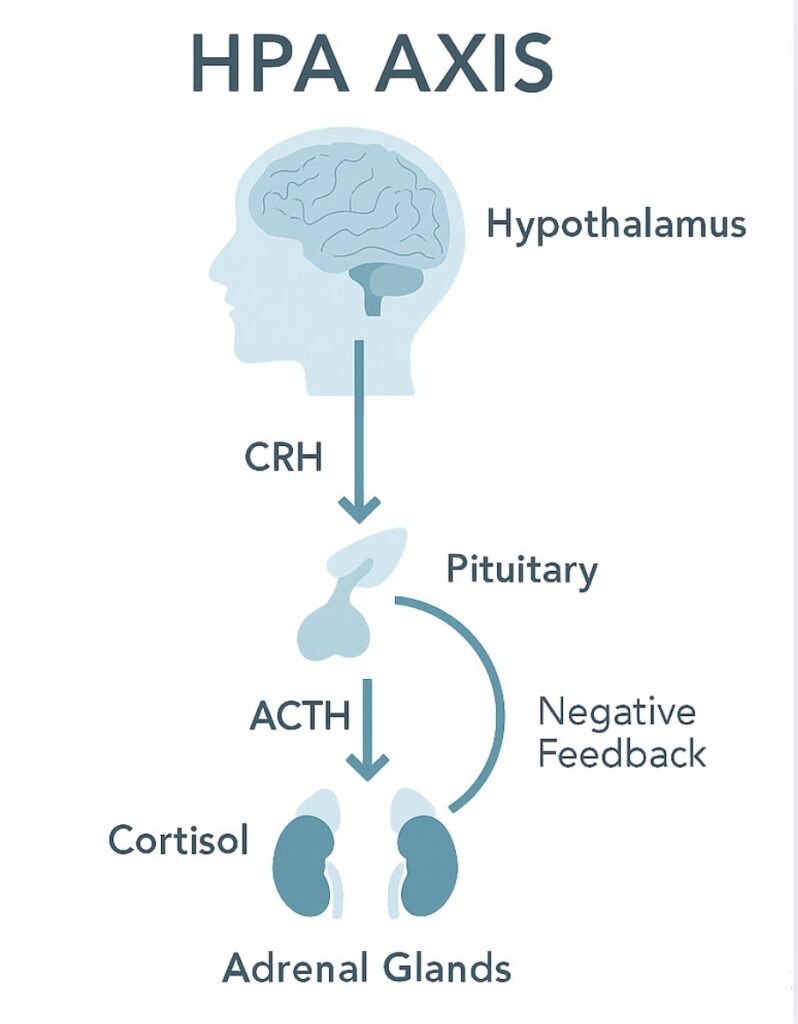
- The hypothalamus > detects stress and releases corticotropin-releasing hormone.
- The pituitary gland > signals are sent to PT to release adrenocorticotrophic hormone.
- The adrenal glands > release cortisol known as the stress hormone. Cortisol gives your body the alertness and prepares for fight or flight mode. Once the threat is gone, cortisol levels drop and the body comes back to balance.
What if the stress persists and becomes chronic?
When you feel under constant stress, the HPA axis is on alarm mode and keeps releasing cortisol which can drain you.
This can lead to:
- Hormonal imbalances
- Fatigue
- Anxiety and irritability
- Irregular sleep
- Digestive issues
- Brain fog

This constancy can desensitise your stress system which can keep you in the loop but end up losing resources.
Healing and balancing HPA axis
The HPA axis can rewire through consistent self-care and awareness. Few ways to reset your stress system:
- Regular sleep
- Good diet and supplements
- Exercise and movement
- Social support
- Cognitive regulation
- Therapy
- Mindfulness and meditation
WHEN TO SEEK HELP!
If you feel under constant worrying and fatigue, emotional numbness or any other physical reactions, it’s time to reach out.
Stress might just start as a thought but can end up leaving a finger print all over the body, healing this needs care and awareness.
REFERENCE
Leistner, C., & Menke, A. (2020). Hypothalamic-pituitary-adrenal axis and stress. Handbook of clinical neurology, 175, 55–64. https://doi.org/10.1016/B978-0-444-64123-6.00004-7
